






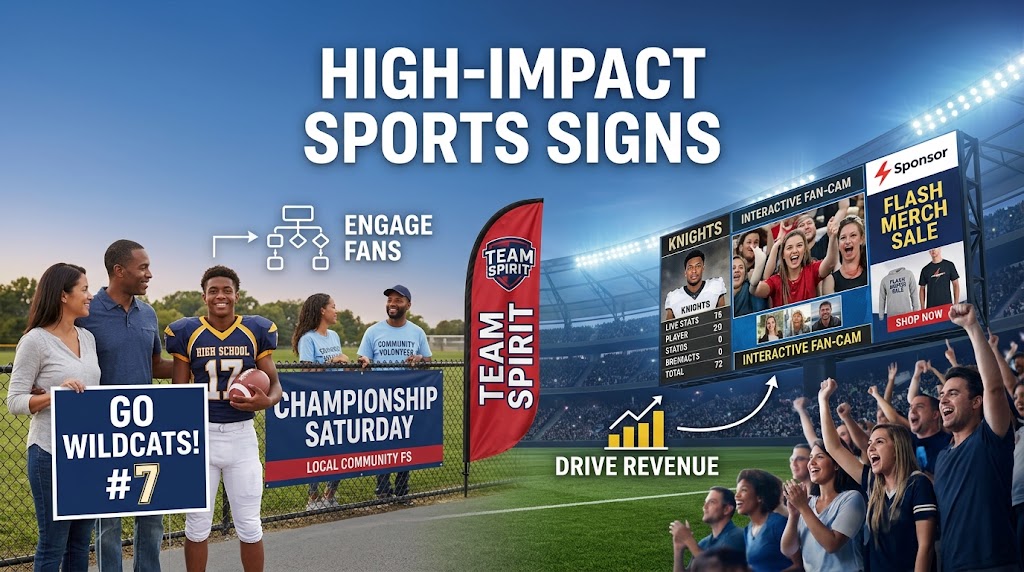
Trying to pick the right sports sign can feel like a tough call, but it really comes down to one thing: what are you trying to accomplish? Whether you’re a parent cheering from the sidelines, a coach firing up the team, or an event organizer managing a massive tournament, the perfect sign is just the one that fits your goal, budget, and audience.
Matching the Right Sports Sign to Your Sporting Event
Choosing the best sign isn’t about finding a single “best” option. It’s a balance between durability, visibility, and cost. Your role and the size of the event will point you toward the right solution to make sure your message gets seen.
This decision tree breaks it down, showing how your specific goal—from a simple yard sign for one player to a giant LED screen for a pro stadium—maps to the best type of sign.
As you can see, figuring out your main objective is the first and most important step. Everything else flows from there.
For Parents and Local Supporters
If you’re a parent who wants to show some love for your young athlete, your needs are pretty simple. You’re looking for something affordable, personal, and easy to set up. For this, the classic corrugated plastic yard sign is your MVP.
These signs are lightweight, inexpensive, and can easily stand up to a season’s worth of weather. They’re the perfect canvas for a player’s name, number, and a bit of team spirit. Just pop it on an H-stake, stick it in your front lawn, and you’re good to go.
Sports Signs For Teams and Schools
Athletic directors, coaches, and team managers have a totally different playbook. Their job is to build team pride, direct crowds, and get the word out about the next big game. Here, durability and the ability to reuse signage year after year are crucial.
- Vinyl Banners: These are the undisputed workhorses for high school and college sports. You can hang them on fences, bleachers, or gym walls. They’re built tough for the outdoors and roll up easily for storage until next season.
- A-Frame Signs: Often called sandwich boards, these are fantastic for temporary wayfinding. Set them up near parking lots, ticket booths, or concession stands to keep foot traffic flowing smoothly.
- Feather Flags: With their height and constant motion, these flags are impossible to ignore. Use them to mark the main entrance or create an impressive “walk of champions” for the players as they enter the field.
When it comes to team-level signage, the goal is to create a professional and spirited atmosphere without breaking the bank. A smart mix of banners, A-frames, and flags can make any high school field feel like a big-league stadium.
For Professional Events and Stadiums
Once you step into the world of professional tournaments and major league stadiums, the entire game changes. It’s no longer just about information; it’s about creating a mind-blowing fan experience and driving serious revenue. This is where digital signage, especially LED technology, completely takes over.
There’s a reason LED tech now holds a massive 39.0% share of the global signage market. Its brightness is unbeatable, and it can be scaled to create the colossal screens you see in professional arenas. In fact, the entire signage industry is expected to explode from USD 56.0 billion in 2026 to USD 103.4 billion by 2036, with digital leading the way. If you want to dive deeper, you can explore more data on the signage market to see just how fast things are moving.
Designing Sports Signs That Actually Capture Attention
A great sports sign is more than just a logo slapped on a piece of plastic. It’s a visual rallying cry for everyone—from the players on the field to the fans in the cheap seats. So what’s the difference between a sign that gets lost in the stadium clutter and one that truly grabs attention? It all boils down to a few smart design choices that put readability and impact first.
You have to think about where the sign will live. A banner viewed from across a football field needs a completely different design than a small sign seen up close by the concession stand. The goal is always the same, though: create something that’s not just nice to look at, but is instantly understood from a distance.
The Power of Color and Contrast
Color is your most powerful tool. It’s packed with emotion and instantly connects to team identity. Your first move should always be to pull from your team’s official color palette. This is non-negotiable, as it builds that immediate sense of pride and unity.
But just using team colors isn’t the whole story. You absolutely need high contrast. A dark blue logo on a black background might look slick on a computer screen, but from the bleachers, it’s just an unreadable smudge.
- Good Contrast: Think bold pairings that pop. Royal blue on crisp white, bright red on a vibrant yellow, or a deep forest green on a light gray background.
- Poor Contrast: Stay away from subtle, low-contrast combinations. Light gray on white or a deep maroon on dark brown just don’t have the visual punch needed for a quick glance.
There’s a simple trick I use called the “squint test.” Just take a few steps back from your design proof and squint your eyes. If the most important parts are still clear and readable, your contrast is working.
The ultimate test is legibility at a glance. A fan should be able to identify the team and read the core message in the split second they see your sign, whether they’re driving past or sitting across the stadium.
Choosing Fonts That Work Hard
Typography can make or break your sign. I’ve seen far too many signs fail because someone chose a fancy script font that looked great up close but turned into an illegible blur from more than ten feet away. For sports signs, clarity beats creativity every single time.
You’ll want to stick with bold, clean, sans-serif fonts. Think classics like Helvetica, Arial, or Franklin Gothic. These workhorses are designed for maximum readability, without the little decorative “feet” (serifs) that can get lost from afar.
A good rule of thumb I’ve always followed is that text should be readable from 10 feet away for every inch of letter height.
Let’s put that into practice. Imagine a “Go Wildcats!” sign for a high school football team. If your letters are only three inches tall, the sign becomes unreadable beyond 30 feet—which barely reaches the first row of bleachers. For a large banner on a fence, you should be aiming for letters that are at least 10-12 inches tall to make a real impact.
Effective design isn’t about throwing every idea at the wall. It’s about making a few deliberate, smart choices that serve a purpose. By focusing on high-contrast colors and clean, large typography, you’ll create sports signs that not only look professional but actually do their job of firing up the crowd.
Strategic Sign Placement for Maximum Fan Impact
Even the most incredible sign design is worthless if nobody sees it. Where you put your sports signs isn’t just a final detail—it’s what separates a smart investment from a wasted one. The right placement can totally transform a sign’s impact on fans and boost your visibility in a big way.
Whether you’re working with a simple yard sign or a stadium-sized digital display, the goal is always the same: find the sightlines. Think about how fans move through the space, from the moment they arrive to the second they find their seats. Every step is an opportunity.
Placing Yard Signs and Banners Effectively
For a personal yard sign, just sticking it in the lawn isn’t enough. You have to think like a passerby. Walk out to the street and look at your property from the perspective of someone driving or walking by. Are there bushes, a mailbox, or parked cars in the way?
Position your sign to avoid those obstructions entirely. And don’t forget about local rules. Many towns have setback rules that require signs to be a certain distance from the road or property line. A quick search on your city’s website can save you a headache and ensure your sign is both compliant and perfectly placed.
When you’re hanging larger banners at a sports venue, you need to think like a camera operator. Where will the broadcast cameras be pointed?
- Behind the goalposts or home plate: These spots are in the background of nearly every live-action shot and replay.
- Along the main spectator walkway: You’ll catch all the foot traffic from fans heading to their seats or the concession stand.
- On the outfield fence: A classic for a reason. It’s a massive, uninterrupted canvas that gets a ton of screen time.
Getting your banner into a potential camera shot is a pro move. It can multiply your exposure, turning a local sign into an ad seen by a much wider broadcast audience.
The goal is to find high-traffic zones, both for in-person viewing and media coverage. A well-placed banner doesn’t just support the team; it becomes part of the game-day spectacle.
Locating Digital Displays for Ultimate Engagement
With digital sports signs and jumbotrons, placement is a full-blown science. Experts carefully analyze stadium architecture to pinpoint the one perfect location. It’s not about just finding an empty wall; it’s about making sure every single fan—from the front row to the nosebleeds—has a crystal-clear view. You can see how the pros do this by checking out major jumbotron venues.
This process involves mapping thousands of individual sightlines to ensure things like instant replays, stats, and sponsor ads are always visible. Bad placement creates blind spots, which only frustrates fans and offers zero value to advertisers. A perfectly placed digital screen, on the other hand, becomes the heart of the fan experience, driving engagement and making the entire event more exciting.
How Digital Sports Signs Are Changing the Game Day Experience
While classic signs are great for building team spirit, digital sports signs are completely changing the live event itself. They’ve gone way past just showing the score, becoming the energetic core of modern stadiums that pulls fans right into the game.
These screens build an atmosphere that you just can’t get anywhere else. Picture the roar of the crowd after an instant replay of a game-winning touchdown, or the whole stadium laughing together at a hilarious fan-cam moment. That’s technology creating powerful, shared experiences in real-time.
More Than Just a Scoreboard
Today’s digital screens are serious engagement tools. They do so much more than just count down the clock.
- Live Player Stats: When a batter walks up to the plate, their live stats—batting average, recent hits, RBIs—can flash on the screen. This gives fans deeper insight and adds a whole new layer of drama to every at-bat.
- Social Media Integration: Venues can display a live feed of fan posts using the event hashtag. It makes people feel like they’re part of the show and gets more people talking about your event online.
- Interactive Games and Polls: During halftime or timeouts, you can run text-to-vote polls or simple games on the screen. It keeps the energy up and the crowd locked in.
These features transform the experience from passive viewing to active participation. It’s that level of interaction that makes being there in person truly unforgettable. You can find more information about how these screens work by exploring our guide on the modern digital scoreboard.
Driving Revenue and Sponsorship Value
For venue owners and promoters, digital signs are a huge source of revenue. The old days of one static banner for one sponsor are over. With a digital display, you can cycle through ads for dozens of sponsors throughout a single game.
Digital signage allows you to dynamically update content, which means you can run targeted promotions for half-time concession deals or flash sales on team merchandise, directly boosting on-site sales.
This capability is a huge reason the digital signage market in sports is exploding. The global market size hit USD 1,431.4 million in 2024 and is projected to skyrocket to USD 3,065.0 million by 2030. This investment is paying off, with some reports showing these screens can increase fan engagement by an estimated 25-30%, turning spectators into active participants. To understand the full scope of this growth, you can learn more about the sports technology market.
Scalable Solutions for Any Event
Here’s the best part: digital signage isn’t just for massive pro stadiums anymore. The technology has become incredibly flexible, with solutions for events of any size.
A major league team might install a permanent, custom-built jumbotron, but a weekend soccer tournament can get that same big-league feel by renting a mobile LED trailer. These are self-contained units that can be driven anywhere, set up in minutes, and deliver a professional-grade screen for player intros, sponsor ads, and live video. This flexibility brings a dynamic, big-screen experience to community fields, high school championships, and regional competitions.
Installing and Maintaining Your Signs for Longevity
Getting your custom sports signs delivered is a great feeling, but the job isn’t over. Proper installation and a bit of upkeep are what protect your investment, making sure your signs look sharp and last the whole season—or even longer. How you install a sign has a massive impact on its safety and effectiveness.
A weak installation can cause a sign to blow away in the first big gust of wind, tear, or even become a safety hazard. Taking a few extra minutes to get everything secured the right way pays off in both durability and appearance.
Securing Yard Signs and Banners
For standard corrugated plastic yard signs, the trick is all about using the H-stakes correctly. Don’t just jab the sign into the soft topsoil and call it a day. You need to drive the stake deep into solid, compacted ground. If the soil is too loose, your sign will act like a sail and disappear with the first strong breeze.
When it comes to hanging large vinyl banners on a fence, sagging and tearing are your two biggest enemies. The solution? Use zip ties or bungee cords through every single grommet—not just the corners. This small step distributes the wind load evenly across the banner, which stops the corners from ripping out and prevents that droopy, unprofessional look nobody wants.
A well-installed sign speaks volumes about your organization’s professionalism and attention to detail. Whether it’s a small yard sign standing perfectly straight or a huge banner pulled perfectly taut, those details show you take pride in your team.
The Complexity of Professional Digital Sign Installation
While you can definitely handle most printed signs on your own, installing a large-scale digital sports sign is a whole different ballgame. These are complex projects that involve structural engineering, high-voltage electrical work, and complex data connections. This is absolutely not a DIY job.
There’s a reason certified professionals are required for this kind of work. They conduct site surveys to check load-bearing capacities, handle all the necessary permits, and ensure the entire setup complies with local building and electrical codes. Trying to cut corners here can lead to catastrophic failures, create serious safety risks, and will almost certainly void your warranty. To get a better sense of what’s involved, you can see what goes into a professional jumbotron installation process.
This part of the industry is booming. The sports technology market is on track to jump from USD 34.25 billion in 2025 to USD 68.71 billion by 2030. Within that, services for signage installation and content management are the fastest-growing segment, which really shows how much the industry relies on expert, end-to-end support. You can find out more about this sports technology trend and see why professional services are so essential.
Your Simple Sign Maintenance Checklist
Once your signs are up, a little routine maintenance goes a long way. Follow this simple checklist to keep your sports signs looking brand new:
- Regular Cleaning: For vinyl banners and plastic signs, a quick wipe-down with a soft cloth and some mild soap and water is all you need. It gets rid of the dirt and grime that can dull your colors.
- Check Fasteners: At least once a month, do a quick walk-around and inspect all the zip ties, bolts, and mounting hardware. Wind and vibrations can loosen things over time, so tighten up anything that feels loose.
- Digital Screen Care: If you have an LED display, make sure to keep the ventilation areas clear of any debris to prevent overheating. Give the screen a visual check for any dead pixels or odd-looking spots and report them to your service provider right away.
Common Questions About Sports Signs
When you’re ordering signs for your team or event, a few key questions always pop up. Getting straight answers on materials, timelines, and local rules is the best way to make sure your project goes off without a hitch.
Let’s clear up some of the most common questions we hear from coaches, parents, and event organizers. A little bit of know-how here can save you a lot of headaches later.
What Is the Best Material for Outdoor Sports Signs?
The “best” material really comes down to one thing: how long you need the sign to last. For short-term or seasonal use, like player signs for a single soccer season, corrugated plastic (you’ll often hear it called Coroplast) is your go-to. It’s affordable, lightweight, and holds up surprisingly well against a few months of sun and rain.
But if you’re looking for something that can hang on a stadium fence all year, you need to step it up. Heavy-duty vinyl is the far better choice for that kind of durability. And for permanent digital displays, only an outdoor-rated LED screen with a high IP rating will have the weather-sealed construction needed to operate reliably day in and day out.
How Far in Advance Should I Order Custom Signs?
This completely depends on what you’re ordering. For straightforward printed signs like standard yard signs or vinyl banners, a 1-2 week lead time is usually a safe window. That gives the printer enough time to get your design proofed, printed, and shipped out.
However, that timeline gets much longer for bigger projects. If you’re thinking about a custom-fabricated sign or installing a large digital LED screen, you need to start the conversation several months in advance. That bigger window is crucial for handling site surveys, design consultations, production, and professional installation. Always double-check the timeline with your provider and build in a buffer before your deadline.
Don’t wait until the last minute. The biggest mistake you can make is underestimating production and shipping times, which can leave you without signs on game day. Plan ahead!
Will I Need a Permit for My Sports Sign?
This is a huge one. The short answer is: it depends, but for anything big, it’s a strong “probably yes.” Small, temporary signs on private property—like a yard sign celebrating a player in your own front yard—almost never require a permit.
The game changes once you go bigger. Large banners, any sign installed in a public space, or any kind of permanent structure will almost always require a permit from your local city or county planning department. You absolutely have to check local regulations before you order or install anything. A quick phone call can save you from fines and being forced to take the sign down.
How Do Digital Signs Increase Event Revenue?
Digital signs are absolute game-changers for revenue. Their biggest strength is the ability to sell advertising space to multiple sponsors and rotate their ads throughout the event. This blows the doors off the single ad spot you get with a static banner, massively increasing your ad inventory.
But it’s not just about sponsorships. You can run real-time promotions for concession stands (“Hot dogs 50% off for the next 15 minutes!”) or push merchandise sales to directly boost your on-site revenue. The vibrant, dynamic content also creates a much more engaging atmosphere for fans, building loyalty that pays off in repeat attendance and long-term support.
Ready to bring a professional, high-impact viewing experience to your next event? The team at Jumbotron Screens, LLC. delivers end-to-end solutions, from mobile LED trailers to permanent stadium installations. Explore our custom digital signage options and see how we can help you captivate your audience.