






LED Screens for Sale: Everything You Need to Know
If you are looking for LED screens for sale, you are likely evaluating options for high-impact venue displays, corporate installations, live events, or outdoor advertising. Whether you need a portable display for temporary activations or a permanent outdoor structural screen, investing in a commercial LED system requires a solid understanding of panel engineering, pixel densities, power delivery, and environmental ratings. From ultra-fine pitch indoor video walls to heavy-duty mobile LED trailers, this guide breaks down everything you need to know before buying an LED display.
Quick Summary of LED Screens for Sale
Commercial LED screens for sale encompass several specialized categories: ultra-fine pitch indoor panels, weather-hardened outdoor displays, modular rental units, and mobile trailer-mounted screens. System costs vary widely based on total square footage, pixel pitch (resolution), and controller processing hardware—typically ranging from $20,000 for small portable setups to $50,000 to $150,000+ for large-format commercial jumbotrons.
Why Choose Direct-View LED Over Traditional Displays?
Modern direct-view LED technology has largely superseded traditional LCD video wall arrays and projection systems across commercial environments. Choose the right screen for your business. Key performance advantages include:
Seamless Surface Mapping: Unlike LCD video walls that feature bezel lines across the image, modular LED cabinets assemble seamlessly into a single continuous visual canvas.
Unmatched Brightness Output: Outdoor LED panels deliver brightness levels from 5,000 to 7,500+ nits, ensuring complete visual clarity even under direct sunlight.
Modular Scalability: LED displays are built from individual modules mounted into structural cabinets, allowing you to build screens in any aspect ratio, custom curved format, or massive display dimension.
Long Operational Lifespan: High-grade LEDs offer an operational rating of 80,000 to 100,000 hours to half-brightness, significantly lowering long-term total cost of ownership.
Understanding Pixel Pitch and Viewing Distance of LED Screens for Sale
One of the most critical decisions when evaluating LED screens for sale is selecting the correct pixel pitch. Expressed in millimeters (e.g., P2.5, P3.91, P6.67), pixel pitch measures the distance from the center of one diode cluster to the center of the next. A lower pixel pitch represents higher diode density and sharper image resolution at close range.
Common Pixel Pitch Classifications
P1.5 to P2.5 (Ultra-Fine Pitch): Built for close-proximity indoor environments like corporate boardrooms, luxury retail, command centers, and broadcast studios where viewers stand 5 to 10 feet away.
P3.91 to P4.81 (Standard Indoor & Event Rentals): The industry standard for indoor venue screens, trade show booths, and houses of worship. Viewers typically sit or stand 12 to 18 feet away. For details on selecting the right specs for indoor layouts, see our guide on how to pick the right LED screen for your space.
P6.67 to P10 (Outdoor High-Brightness Displays): Engineered specifically for outdoor billboards, highway signage, perimeter stadium boards, and large event jumbotrons viewed from 25 to 100+ feet away.
Pro Tip: A reliable rule of thumb for minimum viewing distance is 1 meter per 1 millimeter of pixel pitch. For instance, a P3.91 display maintains crisp resolution at approximately 3.9 meters (13 feet) viewing distance.
Primary Types of Commercial LED Screens for Sale
1. Outdoor LED Advertising Screens
Outdoor LED cabinets are engineered with heavy-duty aluminum or steel frames and silicone-sealed module faces to withstand harsh weather conditions. They feature automatic brightness adjustment sensors to optimize daytime visibility and comply with local night-time light pollution ordinances. Learn more in our breakdown of outdoor advertising LED screens.
2. Indoor Venue & Institutional Displays
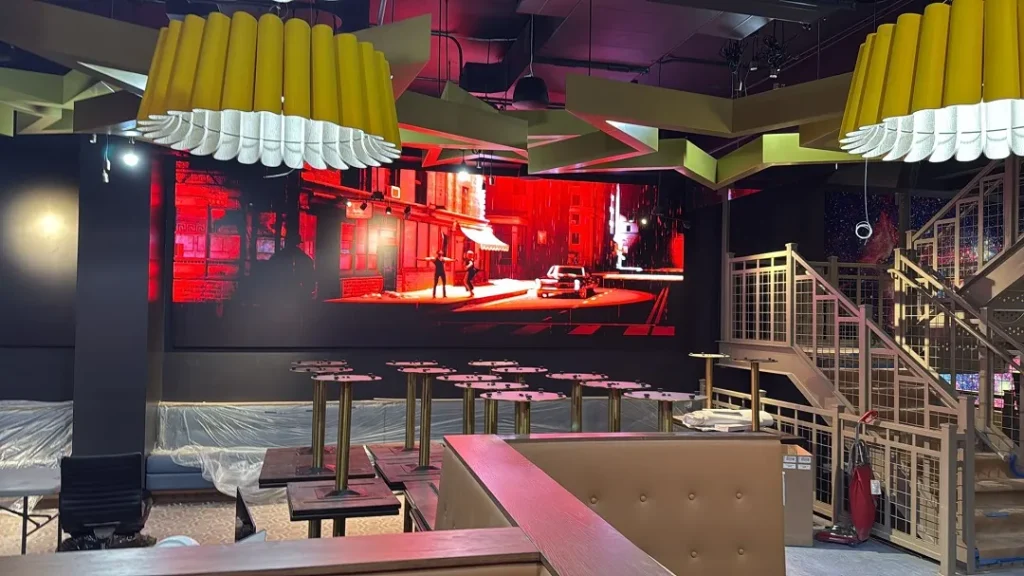
Focusing on high color accuracy, wide viewing angles (140°+ horizontal/vertical), and high refresh rates, indoor LED displays enhance engagement in auditoriums, retail spaces, and gymnasiums. Discover how facilities utilize these systems in our overview of installing a LED screen in a school gymnasium.
3. Portable & Mobile LED Screens
Designed for rapid deployment, portable LED screens feature lightweight die-cast aluminum cabinets, fast-locking rigging hardware, and flight case storage. They are widely used for touring events, roadshows, temporary outdoor movie nights, and dynamic brand activations.
4. Large-Format Commercial Jumbotrons
Custom large-format displays utilized by sports complexes, entertainment venues, and outdoor plazas require specialized structural engineering, dedicated power distribution, and multi-input Nova Star video processing controllers.
Key Technical Considerations Before Buying
1. IP Weatherproofing Ratings
Outdoor screens require an Ingress Protection rating of at least IP65 on the front face (complete dust tightness and protection against water jets) and IP54 on the rear enclosure to guarantee reliable operation through rain, wind, and severe weather. Many outdoor Jumbotron screens have IP 66/68 ratings. These cabinets can operate under water. Jumbotron has very high IP ratings but if your installation is near saltwater, your screen needs to be specially manufactured to protect the PCB, receiving cards, power supplies from decay caused by saltwater humidity. We offer special manufacturing for all screens installed near saltwater.
2. Refresh Rate and Camera Capture
If your display will be filmed, broadcast, or used alongside photography (such as in sports arenas or live concert venues), ensure the receiving cards support a minimum refresh rate of 3,840 Hz to prevent flickering and scan lines on camera footage. Jumbotron Screens for sporting events like Ice Hockey include high powered IC Drivers for beat performance at 7680 Hz.
7680 HZ is for slow motion replays even for hockey pucks traveling over 100 MPH.
3. Front-Service vs. Rear-Service Access
Structural access plays a key role in installation costs:
Front-Service Modules: Utilize magnetic removal tools to pull modules from the front, allowing direct mounting flat against solid interior walls without requiring rear access space.
Rear-Service Cabinets: Require dedicated catwalks or service doors behind the display, ideal for outdoor billboard structures and truss-mounted systems.
4. Power Distribution & Consumption
While peak power consumption occurs when an LED screen displays 100% full-white imagery, the maximum power is also achieved upon startup. Average operational power draw generally ranges between 25% and 30% of peak rating.
Our UL Rated Power Distribution Boxes accept 208 or 480 V AC 3-phase input and will output 20-amp single phase circuits, which is what our power supply requires. On startup, the initial draw can be very large for less than 0.5 seconds. We can mitigate this power draw by staggering the the startup of each section of the video board by fractions of a second.
How Much Do Commercial LED Screens Cost?
Commercial LED display costs depend on screen dimensions, pixel density, cabinet materials, processing hardware, and installation requirements:
Small Portable / Modular Event Units: $20,000.00 or more
Medium Indoor Commercial Displays: $40,000 – $80,000
Large Outdoor Advertising Displays & Jumbotrons: $100,000 – $250,000+
Frequently Asked Questions
Q: What is the average lifespan of an LED display screen? A: High-quality commercial LED displays are rated for 80,000 to 100,000 operating hours. With proper maintenance and operational brightness scaling, displays can reliably last more than 10 years.
Q: Can indoor LED cabinets be used outdoors permanently? A: No. Indoor LED modules lack waterproof potting, UV-resistant masks, and high brightness for bright sunlight. Indoor screens are typically rated at about 1,200 NITS per square meter. My laptop is about 700 NITS per square meter. They are usually about IP20 making them vulnerable to water and dust damage.
Q: What processing hardware is required to run a commercial LED screen? A: An LED screen requires a video processor/sending box (such as NovaStar VX or Taurus series) that accepts standard HDMI/DisplayPort video feeds and maps the pixels directly to the display’s receiving cards via CAT6 cables or FIBER Wire.
Q: How do I choose between buying vs. renting an LED screen? A: Purchasing is recommended for permanent architectural installations, multi-year advertising assets, or organizations hosting recurring events. Renting is ideal for single-weekend festivals or occasional trade shows.
Conclusion about LED Screens for Sale
Investing in a high-performance LED display requires balancing visual distance requirements, physical structural environment, power demands, and controller capabilities. Whether you need a sleek indoor video wall or a heavy-duty outdoor jumbotron, choosing the right specifications ensures long-term reliability and maximum visual impact.
For custom engineering advice, display quotes, or site evaluations, contact Jumbotron Screens LLC to discuss your specific venue requirements.