






An outdoor LED TV is a completely different beast than the TV in your living room. It's a specialized display engineered from the ground up to perform in the wild—delivering bright, crisp visuals in direct sunlight and shrugging off whatever Mother Nature throws at it.
You can't just stick a regular TV in a protective case and call it a day. Think of it like a family sedan versus an all-terrain vehicle. Both are cars, but you wouldn't take the sedan off-roading and expect it to survive. An outdoor LED TV is that all-terrain vehicle, built for rugged, unpredictable conditions.
What Makes an Outdoor LED TV Different?
Trying to use a standard indoor TV outside is a recipe for a wasted budget and a lot of frustration. The screen will look washed out and unwatchable in daylight, and it won't be long before humidity, dust, and extreme temperatures fry the internal components.
A true outdoor LED TV, on the other hand, is purpose-built to thrive in these exact environments. Its core job is to deliver brilliant, reliable visuals no matter the weather. Companies like Jumbotron Screens, LLC build these displays for maximum impact and longevity, making them a powerful tool for businesses, venues, and event organizers.
Let's break down the key differences between a purpose-built outdoor display and a standard television you'd have at home.
Outdoor LED TV vs Standard Indoor TV
This quick comparison highlights the fundamental differences that make outdoor LED TVs a necessity for any open-air application.
| Feature | Outdoor LED TV | Standard Indoor TV |
|---|---|---|
| Brightness | Extremely high (5,000+ nits) for clear visibility in direct sunlight. | Low (300-500 nits), designed for controlled indoor lighting. |
| Weather Resistance | Fully sealed, weatherproof enclosures (IP65+ rated) to protect against rain & dust. | No protection against moisture, dust, or humidity. |
| Temperature Control | Internal heating and cooling systems for operation in extreme heat and cold. | Designed for a stable, climate-controlled room. |
| Durability | Built with anti-corrosive materials and UV-resistant components. | Susceptible to rust, fading, and damage from outdoor elements. |
| Screen Glare | Anti-reflective and anti-glare coatings to ensure a clear picture. | Highly reflective screen that is unviewable in bright sunlight. |
| Security | Tamper-proof, impact-resistant enclosures to prevent vandalism and theft. | Fragile and easily damaged or stolen. |
Ultimately, an indoor TV is a consumer electronic, while an outdoor LED TV is a piece of commercial-grade infrastructure designed for public-facing performance.
Designed for Visibility and Durability
An outdoor LED TV’s biggest competitor is the sun itself. To win that battle, it needs to be incredibly bright—often 5 to 10 times brighter than a standard television—to keep the picture looking vibrant and saturated even on the sunniest days.
Beyond sheer brightness, these displays are built like tanks. Their engineering includes:
- Weatherproof Enclosures: Tightly sealed casings protect the sensitive electronics from rain, snow, dust, and humidity.
- Temperature Control Systems: Integrated heating and cooling systems allow the display to operate reliably in freezing winters and scorching summers.
- Durable Materials: Every component is selected to resist corrosion and degradation from long-term UV exposure.
The fundamental difference is simple: an indoor TV is designed for a controlled climate, while an outdoor LED TV is engineered to perform as a public-facing asset in an uncontrolled world. This resilience is what makes it a dependable investment.
A Growing Market for Premium Experiences
The secret is out. Businesses and venues everywhere are recognizing the power of high-quality outdoor displays to grab attention and engage audiences. This trend is fueling some serious market growth.
The global outdoor LED TV market was valued at approximately USD 2.45 billion in 2024 and is projected to hit USD 6.12 billion by 2033. That explosive growth shows a clear shift toward investing in premium outdoor visual experiences.
Choosing the right screen is essential for captivating your audience and seeing a real return on your investment. Whether you need a display for a stadium, a retail storefront, or a live event, the unique engineering of an outdoor screen makes all the difference. As you can see in our guide to outdoor jumbotron billboards, the technology's applications are as broad as they are impactful.
Understanding the Specs That Actually Matter
Trying to decipher the technical specs for an outdoor LED TV can feel like you’re drowning in a sea of acronyms. It’s easy to get intimidated by a long list of measurements, but here’s the good news: you only need to master a few key metrics to make a smart investment. Let’s cut through the noise and focus on what really makes a difference in the real world.
It's a lot like buying a car. You don't need to be a certified mechanic, but you should know what matters—things like horsepower, gas mileage, and whether it’s all-wheel drive. In the same way, getting a handle on the core specs of an outdoor display ensures you end up with a screen that truly performs for your audience and delivers an unforgettable visual experience.
This concept map highlights the three pillars of a high-performing outdoor screen: its power to cut through sunlight, its toughness against the elements, and its resilience to everyday wear and tear.
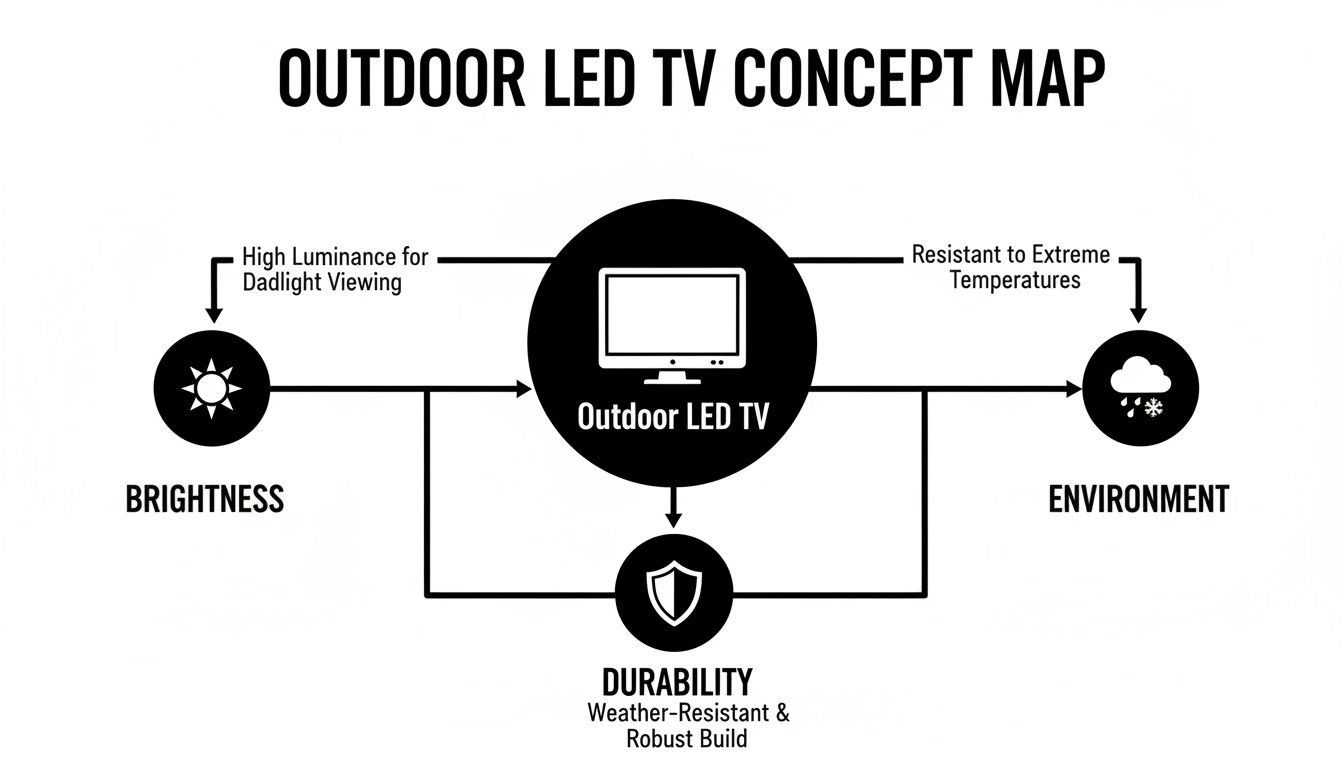
These three factors are the foundation of any successful outdoor display. They work in tandem to define not just how good the screen looks, but how long it will last.
Brightness Measured in Nits
If there’s one spec you absolutely must pay attention to, it’s brightness. Measured in nits, this number tells you how well your screen will perform when it’s up against its biggest competitor: the sun. For context, a standard indoor TV sits around 300-500 nits, which looks great in a living room but becomes a washed-out, unwatchable mess outdoors.
To make sure your content is visible on even the sunniest days, you need serious firepower.
- Shaded Areas: For spots like covered patios, transit shelters, or under an overhang, you should look for a screen with at least 2,500 nits.
- Direct Sunlight: If your display is going to be in the direct path of the sun, you need a bare minimum of 5,000 nits. The gold standard for perfect clarity is 7,000 nits or more.
Skimping on nits is a recipe for disaster. A dim screen means your message is lost, and your investment won't deliver the impact you’re paying for.
IP Rating: Your Weatherproof Shield
The Ingress Protection (IP) rating is a simple code that tells you everything you need to know about how well a screen is sealed from the outside world. Think of it as the armor rating for your TV’s weatherproof shield. It’s always made up of two numbers.
The first digit rates protection against solids like dust and debris, while the second digit rates protection against liquids like rain and sprinklers. In both cases, the higher the number, the better the seal.
A common and reliable rating for outdoor LED TVs is IP65.
- The "6" means the enclosure is completely sealed and dust-tight.
- The "5" means it can handle low-pressure water jets from any direction—more than enough to shrug off a torrential downpour.
This level of durability is non-negotiable for a long operational life. It’s no surprise that the market is shifting heavily towards resilience; consumer adoption of outdoor television technology has jumped by 37%, with buyers prioritizing durability. In fact, 34% of customers are now seeking out UV-resistant screens and 29% are focused on dustproof and waterproof features to protect their investment. You can see more on these trends in this detailed report on the outdoor television market.
Pixel Pitch and Viewing Distance
Pixel pitch is simply the distance between the individual LED lights on a display, measured in millimeters (mm). This is what determines the screen's resolution and image sharpness. A smaller pixel pitch means the LEDs are packed closer together, creating a smoother, more detailed picture.
But smaller isn’t always better—the right choice depends entirely on how far away your audience will be.
- Close Viewing (under 10 feet): For up-close applications like a retail storefront or a concourse menu board, a tight pixel pitch (like P3 or P4) is perfect.
- Far Viewing (over 30 feet): For large venues like stadiums or roadside digital billboards, a larger pixel pitch (P8 or P10) is more than enough. The distance naturally blends the pixels together for the viewer.
Matching the pixel pitch to your viewing distance is the key to balancing cost and quality. It ensures you get a stunningly clear image without paying extra for a resolution that your audience won't even be able to perceive.
Choosing Between Permanent and Mobile LED Solutions
One of the first big decisions you’ll make is whether to anchor your LED display in one place or take it on the road. This choice between a permanent fixture and a mobile screen will steer your project's budget, timeline, and overall impact. It’s not about which is “better”—it’s about matching the right tool to your goals.
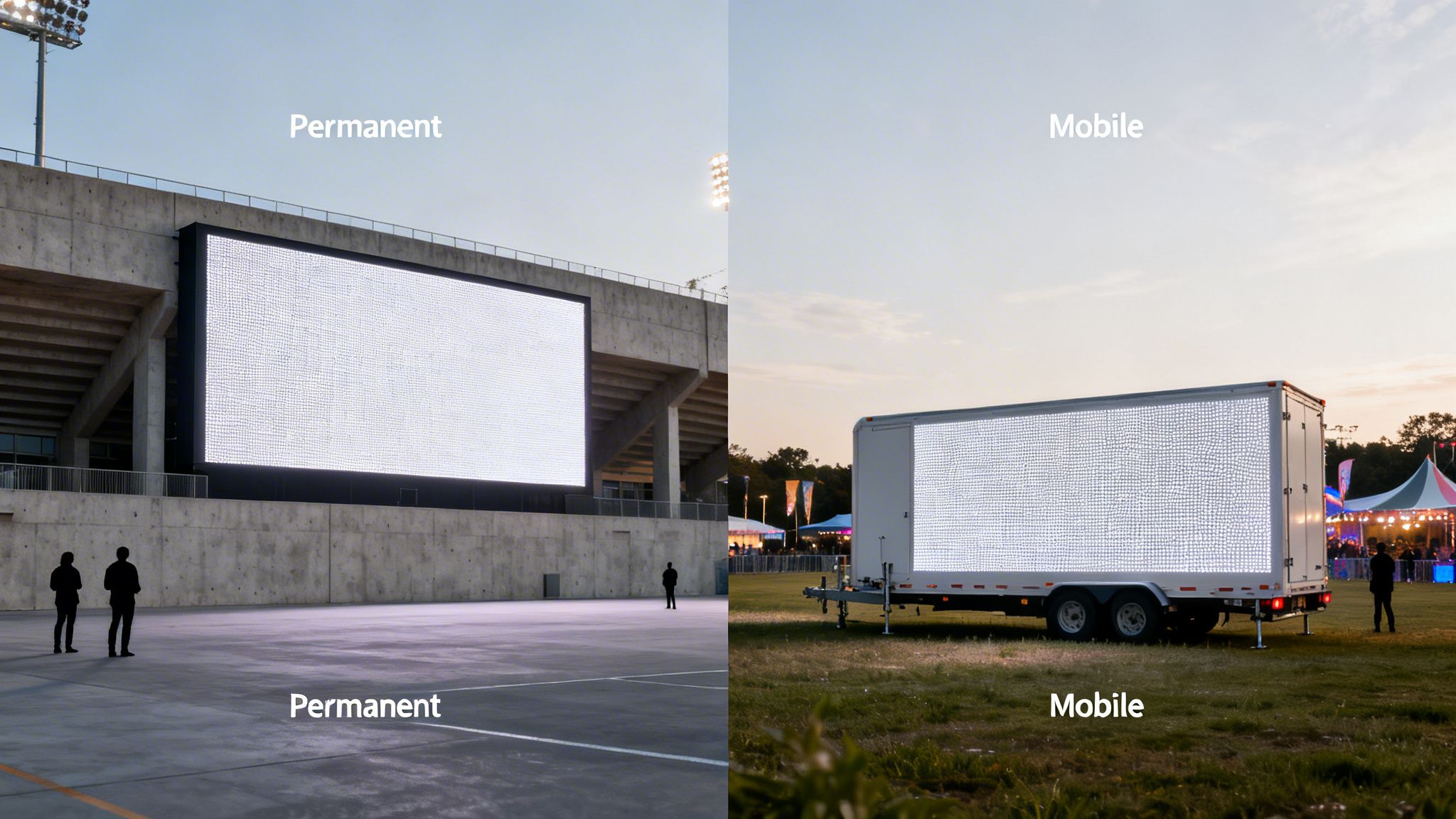
Think of a permanent outdoor LED TV as building a visual landmark. It becomes an architectural part of a venue, designed for a long-term strategy of communication and engagement. A mobile LED solution, on the other hand, is like having a high-impact media truck, ready to deploy wherever your audience gathers.
Permanent LED Installations: Built to Last
Permanent outdoor LED displays are deeply integrated into their environments. They’re engineered for continuous, long-term use in a single spot, making them the go-to choice for venues that need a consistent and powerful visual anchor. These are the massive screens you see lighting up stadiums, shopping centers, and city squares.
Key applications for permanent displays include:
- Stadiums and Arenas: Blasting live video, instant replays, and sponsor ads to thousands of fans.
- Retail Centers: Showcasing promotions and creating an engaging, modern atmosphere for shoppers.
- Public and Municipal Spaces: Displaying community news, event schedules, and digital public art.
The real win here is creating a destination. A permanent installation becomes part of the venue's identity, giving you a reliable platform to generate advertising revenue and elevate the on-site experience for years to come.
A permanent screen is an investment in infrastructure. It signals a long-term commitment to a location and provides a consistent, powerful tool for audience engagement day in and day out.
Mobile LED Solutions: Designed for Flexibility
When your event or message needs to go where the people are, a mobile LED solution is your answer. These are self-contained units, usually mounted on trailers, that offer incredible speed and freedom. An event producer can bring a massive, vibrant screen to a weekend festival, and a construction manager can use one for temporary traffic control.
This agility is the core strength of mobile displays. You aren't tied to one location; you take the show on the road, directly to your target audience. For organizations running events in different cities or venues, this flexibility is a complete game-changer. If you're curious about how these versatile units work, you can learn more about the specifics of a mobile LED trailer and its huge range of applications.
Making the Right Choice for Your Project
So, which path is right for you? It all comes down to a few key questions about how you plan to operate and what you want to achieve long-term.
| Consideration | Permanent Solution | Mobile Solution |
|---|---|---|
| Location | A single, fixed venue. | Multiple locations or temporary event sites. |
| Use Case | Long-term advertising, branding, and information. | Short-term events, rentals, and targeted campaigns. |
| Setup Time | Requires significant planning and professional installation. | Can be set up and operational in a matter of hours. |
| Infrastructure | Needs dedicated power, data, and structural support. | Self-contained, often with onboard power and control. |
| Investment Model | A long-term capital expense with ongoing revenue potential. | A flexible operational expense, often for rental. |
Let’s put it this way: a university building a new football stadium would absolutely invest in a permanent video board. But that same university’s events team might rent a mobile screen for graduation ceremonies on the main quad. Both are using an outdoor LED TV, but their specific needs point to completely different solutions.
Ultimately, once you clarify your main goal—establishing a permanent landmark or having the agility to go anywhere—you'll know exactly which display is perfect for your project.
Exploring Next-Generation Outdoor Display Technology
The technology powering an outdoor LED TV is evolving at a breakneck speed, pushing far beyond basic weatherproofing and high brightness. Today's next-generation displays are smarter, more dynamic, and capable of creating visual experiences that were once just concepts. These are not small, incremental upgrades; they represent a whole new way to engage an audience.
As these displays get more connected and intelligent, the market is exploding. The smart outdoor TV market, valued at USD 2.5 billion in 2025, is on track to hit USD 7.8 billion by 2033, growing at a 15% CAGR. This surge is driven by demand for built-in streaming, voice control, and ultra-bright displays, especially in screen sizes of 55 inches and larger. You can get a closer look at the numbers in this complete smart outdoor TV market report.
This rapid evolution is opening up incredible new avenues for advertisers, event producers, and venue managers to connect with people like never before.
More Than Just a Smart TV
When we talk about a "smart" outdoor LED TV in a commercial or public space, we mean something far more powerful than just connecting to Wi-Fi. Here, "smart" translates to robust, centralized control and operational intelligence.
Modern outdoor displays are now packed with sophisticated software that completely changes how you manage them:
- Integrated Content Management Systems (CMS): This is your command center. From a single dashboard, you can schedule and push content to one screen or a hundred, no matter where they are. Think about updating a nationwide retail promotion with just a few clicks.
- Remote Diagnostics: Smart screens keep an eye on their own health. They can automatically flag potential issues like overheating or a failing pixel, alerting technicians before it becomes a real problem. This proactive approach is key to maximizing uptime.
- Seamless App Integration: These displays can run specialized apps directly on the hardware. This means you can power dynamic data feeds, social media walls, or interactive games without needing a separate, clunky computer wired to the back.
This level of intelligence transforms an outdoor LED TV from a passive screen into an active, managed digital asset. It's the difference between a simple monitor and a networked communication hub that you control from anywhere in the world.
Innovations Redefining Visual Boundaries
Beyond the smarts inside, a wave of physical innovations is shattering the creative limits of old-school rectangular displays. These new form factors let digital content show up in surprising and captivating ways, blending right into architecture and the surrounding environment.
These aren't just futuristic concepts anymore. They are being installed in the real world to create visual landmarks that people won't forget.
The Future of Display Form Factors
Transparent LED Film: This is a true game-changer for any building with a glass facade. Imagine a thin, see-through film you can apply directly to a window. One moment it's clear glass, the next it’s a brilliant video screen, all without blocking sunlight or the view from inside. It literally turns your building into a media canvas.
Flexible LED Panels: These displays can bend, curve, and wrap around almost anything. We're talking about covering round columns, creating flowing, wave-like sculptures, or fitting into unique architectural features. It frees designers from the flat-screen box, allowing for truly organic and immersive digital art.
Glasses-Free 3D Displays: Using advanced optics, these screens create a jaw-dropping sense of depth without any special glasses. Images and objects appear to float in front of the screen or recede deep into the background. It's a powerful way to grab attention and make a lasting impression on anyone walking by.
Forward-thinking providers are already using these technologies to help clients cut through the visual noise. Whether it’s a transparent video wall at a flagship retail store or a massive curved 3D display at a music festival, the goal is always the same: to stop people in their tracks and deliver a message that’s impossible to ignore.
Executing Your Project from Installation to Maintenance
Getting a high-quality outdoor LED TV is a huge step, but the work doesn't stop there. A truly successful project depends on what happens next, from the first site visit all the way through long-term care and upkeep.
Think of it like building a house. You can buy the best materials on the market, but if the foundation is poor and you never check the roof, it won't stand the test of time. Your display is the same—it needs professional construction and regular maintenance to perform flawlessly for years.
This guide will walk you through the entire lifecycle of your display, breaking down the critical steps for installation and then moving into a practical maintenance plan. Following this process protects your investment and maximizes its lifespan.
Planning Your Installation
Before anyone even touches a tool, a thorough planning phase is absolutely essential. This is where you prevent expensive surprises down the road and make sure your display has the maximum possible impact. A professional installation team will handle this in two main stages.
First up is the site assessment. This is a detailed look at the proposed location. Installers will analyze sightlines to find the best viewing angles, check sun exposure to confirm brightness needs, and inspect the mounting surface—whether it’s a wall, pole, or custom frame—to ensure it’s structurally sound.
Next comes logistical planning. With the site assessment done, the focus turns to the nuts and bolts. This means identifying power sources, running all the necessary data and video cables, and securing any local permits needed for construction or signage. Skipping these details is a recipe for delays and budget blowouts.
The Importance of Professional Installation
While it might be tempting to DIY a smaller project, installing a commercial-grade outdoor LED TV is a job for certified professionals. The weight, electrical work, and sheer complexity of these systems require specialized skills and equipment to guarantee safety and performance.
Partnering with experienced installers isn’t just an extra expense—it’s a critical investment in the safety, longevity, and performance of your display. An improper installation can void your warranty, create serious safety hazards, and lead to premature failure.
A professional crew handles everything from securely mounting the screen to calibrating the video processors for perfect picture quality. Companies like Jumbotron Screens, LLC manage this whole process with a nationwide network of certified installers, ensuring the job is done right. Our detailed guide on how to install a jumbotron screen offers a deeper dive into the best practices involved.
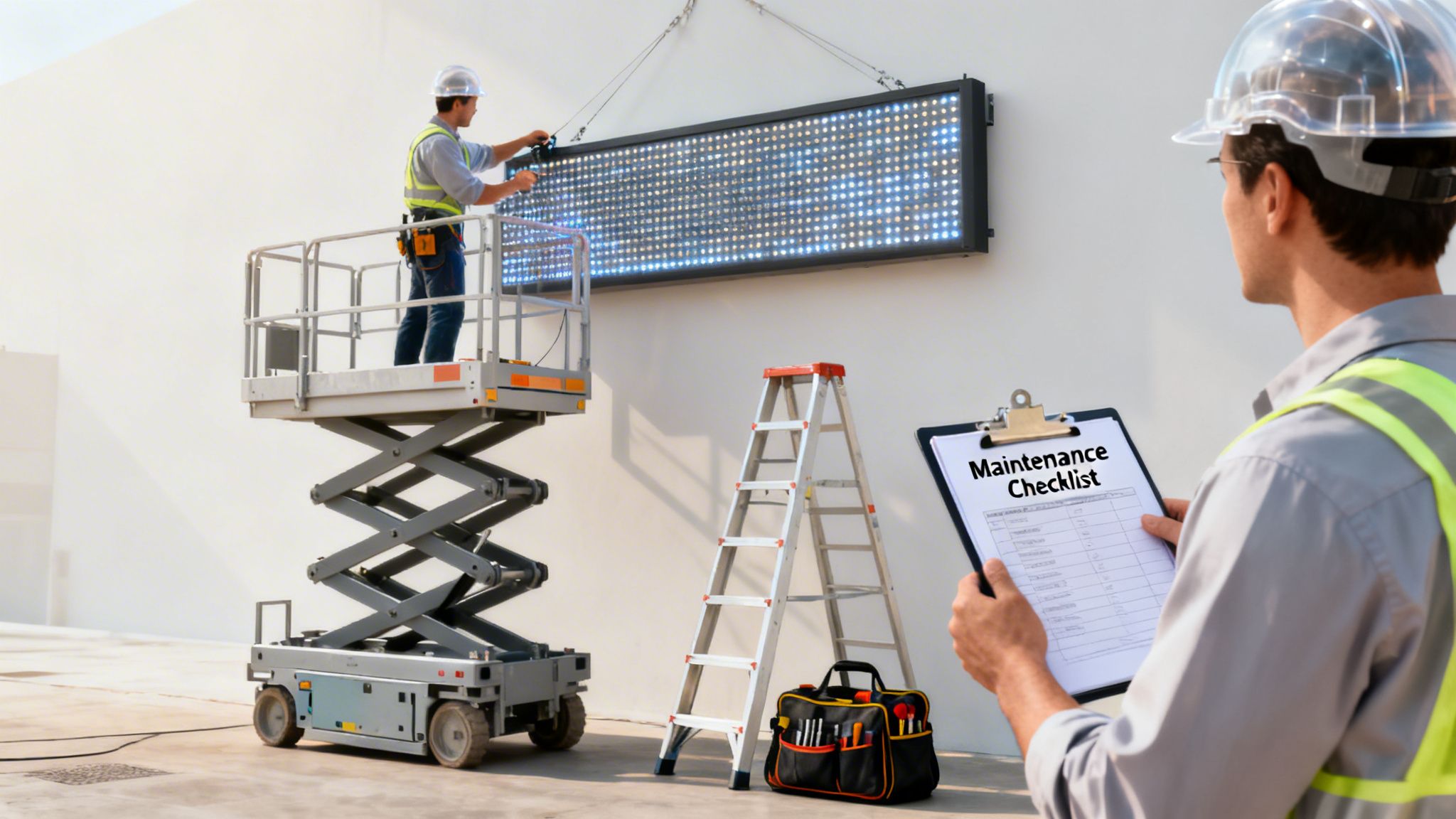
Creating a Long-Term Maintenance Checklist
Once your outdoor LED TV is up and running, the goal shifts to keeping it looking and performing its best. Just like your car needs a regular oil change, your display requires routine care to hit its full 100,000-hour potential lifespan.
A proactive maintenance schedule helps you catch small issues before they become big, expensive problems and keeps your screen looking as brilliant as it did on day one.
Here’s a simple checklist to get you started:
Routine Cleaning (Monthly): Gently wipe the screen with a soft, non-abrasive cloth to remove dust, pollen, and grime. This buildup can block the LEDs and reduce brightness. For stubborn spots, only use a solution recommended by the manufacturer.
Visual Inspection (Quarterly): Do a close-up check of the display. Look for any dead pixels, loose connections, or signs of wear on the housing. Running a full-screen color test is a great way to quickly spot any problems.
Check Ventilation and Cooling (Quarterly): Make sure all air vents, fans, and cooling systems are clear of debris like leaves or dirt. Proper airflow is key to preventing overheating, especially in hot climates.
Inspect Structural Mounts (Annually): Have a professional check all mounting hardware, brackets, and support structures. They’ll confirm everything is still secure and free of corrosion. This is a crucial safety step, especially in areas with high winds or extreme weather.
Review Color Calibration (Annually): Over thousands of hours, the color output of LEDs can drift slightly. An annual calibration check ensures your screen continues to produce accurate, vibrant, and uniform colors across the entire display.
By following this roadmap, you turn your outdoor LED TV from a simple purchase into a durable, high-performing asset that will captivate audiences for years to come.
Calculating the True Cost and ROI of an Outdoor LED TV
Once you’ve settled on the features you need, the conversation naturally shifts to finance. When you're planning for an outdoor LED TV, the initial price tag is just one piece of a much larger puzzle. To make a smart investment, you have to look past the sticker price and understand the total cost of ownership—and, more importantly, how you'll get a return on that investment (ROI).
Focusing only on the cost of the screen itself is a common mistake. The reality is, a handful of other expenses are critical to getting your display up and running. It’s like buying a high-performance engine; it’s useless without the car's chassis, wheels, and electrical system to make it go.
Breaking Down the Total Cost of Ownership
To get a true picture of your total investment, you need to budget for all the parts and services that bring your vision to life. These costs go far beyond just the display hardware.
Your full project budget should account for:
- Mounting and Structural Support: This covers custom frames, poles, or wall mounts engineered to hold the display securely.
- Professional Installation: The labor costs for certified technicians to manage the electrical work, assembly, and safe mounting.
- Video Processors and Control Systems: The brains of the operation—the hardware and software that send content to your screen and manage its performance.
- Cabling and Infrastructure: This involves running power and data lines to the installation site, which can sometimes require trenching or other significant site work.
- Permits and Engineering Fees: Depending on your city and state, you’ll likely need to pay for structural engineering reports and local signage permits.
Thinking about these elements from day one prevents nasty surprises and keeps your project on budget. It paints a realistic picture of the upfront investment required.
Identifying Your Revenue Streams and ROI Drivers
An outdoor LED TV isn't just an expense; it's a powerful asset that can generate serious returns. The trick is to shift your mindset from "cost" to "investment" by pinpointing exactly how the display will drive revenue or create value for your organization. These ROI drivers can be direct, like selling ad space, or indirect, like creating a better customer experience.
For commercial venues, an outdoor display is a revenue-generating machine. The ability to sell advertising space, promote in-house offers, and secure event sponsorships creates new income streams that can pay for the display many times over.
For an event promoter, the ROI is often tied directly to the attendee experience. A massive, brilliant video wall can justify higher ticket prices, drive social media sharing, and create unforgettable moments that bring people back year after year.
This table illustrates some of the primary ways different businesses can generate a return from their outdoor display.
Sample ROI Drivers by Application
| Application Type | Primary ROI Drivers | Secondary ROI Drivers |
|---|---|---|
| Stadium/Arena | Sponsorship deals, third-party advertising sales, live-feed monetization. | Higher ticket prices, increased concession sales, enhanced fan experience. |
| Retail Center | Store promotions, brand advertising from tenants, digital out-of-home (DOOH) ad revenue. | Increased foot traffic, longer dwell times, modern and premium brand image. |
| Event Organizer | Sponsor visibility packages, on-screen ticket promotions, exclusive content access. | Improved attendee satisfaction, viral social media moments, justification for premium pricing. |
| Municipality | Public service announcements, local business advertising, event promotion fees. | Community engagement, emergency alert system, modernizing public spaces. |
By clearly defining these ROI drivers before you even think about purchasing, you can build a rock-solid business case for your outdoor LED TV. This framework helps you measure success and prove the financial value of your investment across its entire lifespan.
Answering Your Outdoor LED TV Questions
As you get closer to making a decision, a few practical questions always pop up. Getting clear answers to these common queries is the best way to finalize your project's specs and move forward with confidence. Let’s tackle some of the most frequent questions we hear from project managers and buyers about an outdoor LED TV.
How Bright Does an Outdoor LED TV Need to Be?
Brightness, which we measure in nits, is hands-down the most important spec to get right. The perfect level really just depends on where the screen will live and how much direct sunlight it’s going to get.
- For shaded areas: If your screen is going under a covered patio or some other kind of overhang, you’ll want at least 2,500 nits. This is plenty of power to keep your content looking clear and vibrant without direct sun.
- For direct sunlight: To cut through sun glare, you need a bare minimum of 5,000 nits. But if you want your visuals to pop on the brightest days, 7,000+ nits is the true gold standard. It ensures your message is always punchy and perfectly readable.
Can I Use a Regular TV in an Outdoor Enclosure?
It’s tempting to think you can save a few bucks by sticking a standard TV in an outdoor case, but we strongly advise against it. The simple truth is that indoor TVs just aren't bright enough to be seen in daylight, leaving you with a washed-out, unwatchable picture.
Beyond brightness, regular TVs aren't built to survive the outdoors. They can't handle the constant temperature swings, humidity, and direct UV exposure. This environment quickly causes components to fail, making a purpose-built outdoor LED TV a far more reliable and durable long-term investment.
What Is the Lifespan of a Professional Outdoor LED TV?
A high-quality, commercial-grade outdoor LED display is an absolute workhorse. These screens are engineered for extreme durability and a very long life. With a consistent and proper maintenance schedule, you can expect your screen to run for 100,000 hours.
Depending on how many hours you run it each day, that can easily add up to more than a decade of rock-solid performance. This incredible lifespan is what turns a professional outdoor display into a sound financial asset for any business, venue, or public space, delivering value year after year.
Ready to bring your vision to life with a brilliant, durable display? The experts at Jumbotron Screens, LLC provide end-to-end solutions, from consulting and installation to ongoing support. Explore our outdoor LED TV options today!
Made with Outrank